
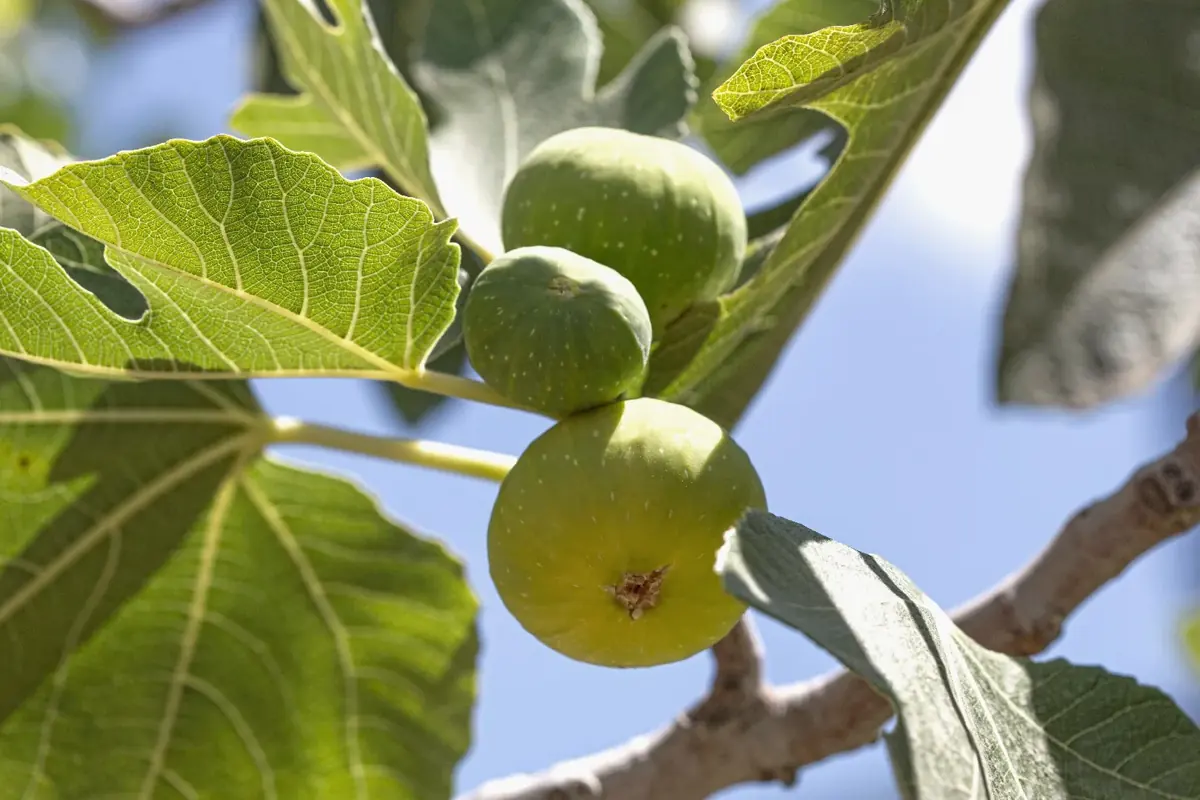
Fig
Broad leaves, dense shade and early fruit — fast-growing and undemanding.
- Scientific name: Ficus carica
- Family: Mulberry family
The fig is a generous tree: quick to grow, wide-shading thanks to its large leaves, and fruiting within a few years of planting. It drops its leaves in winter, letting sun through when you want it and blocking it when you don't — genuinely useful behaviour if you plant it near a façade or an outdoor seating area.
At a glance
- Plant typeTree or shrub
- WateringEvery 1–2 weeks
- LightFull sun
- Comfortable range5 – 38 °C
- Height3 – 10 m
- SpreadUp to 3 m
- HarvestSummer and autumn
- Growth rateFast
Care guide
Watering
Water every one to two weeks, letting the soil dry between. Be more consistent through the growing and fruiting season — a hard dry spell then drops the fruit while it is still small.
Light and heat
Full sun. It spans a wide range from 5 to 38 °C, and benefits from a spot with some wind shelter, since those big leaves tear easily.
Soil and feeding
Feed monthly through spring and summer with a balanced mix, stepping up to fortnightly at peak growth. Stop in winter, and water well after each feed.
Pruning
Prune in winter while dormant: remove weak branches, thin the canopy for airflow and set the shape. Figs respond strongly to pruning and replace the growth quickly.
Propagation
Cuttings and layering in autumn and winter. Figs are among the easiest trees to propagate — a plain hardwood cutting often takes.
In Saudi conditions
Figs are at their best in dry regions with hot summers, which covers most of the Kingdom. Avoid soil that holds water, and keep them away from a leaking irrigation line — the roots will not tolerate standing water.
Common problems
- Small fruit dropping — usually irrigation stress
- Leaf miner and caterpillars on new foliage
- Ripe fruit rotting in humid spells
- Large leaves shredding in sand-laden wind
Need a hand?
Winter pruning and training a fig to throw even shade over an outdoor seating area are part of our landscaping work.
Similar plants
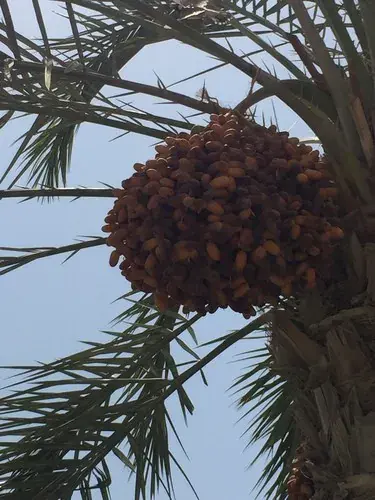
Date palm
Phoenix dactylifera
Saudi Arabia's signature tree: heat-hardy, salt-tolerant, productive for decades.
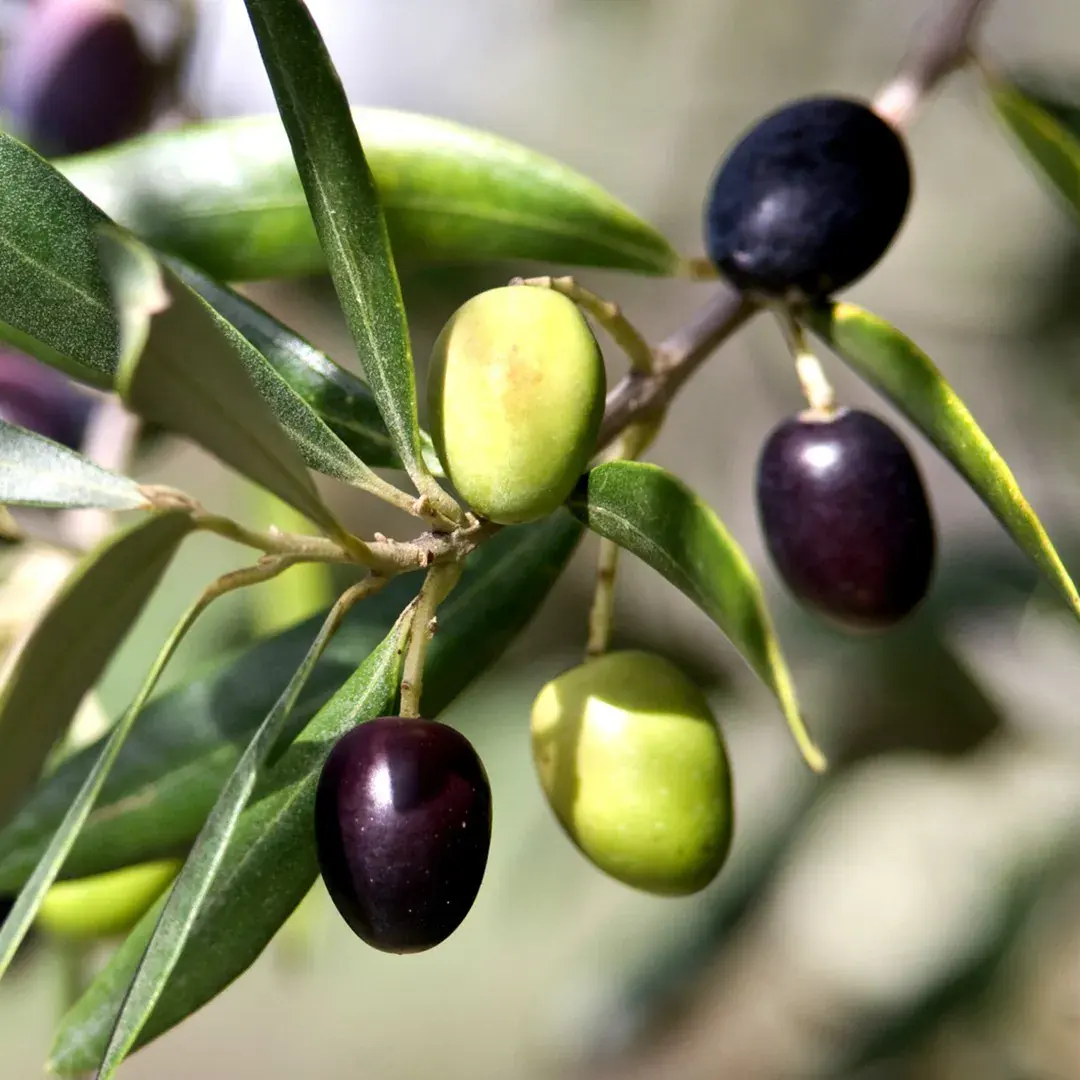
Olive
Olea europaea
A long-lived, silver-leaved tree that shrugs off drought — as a hedge or a specimen.
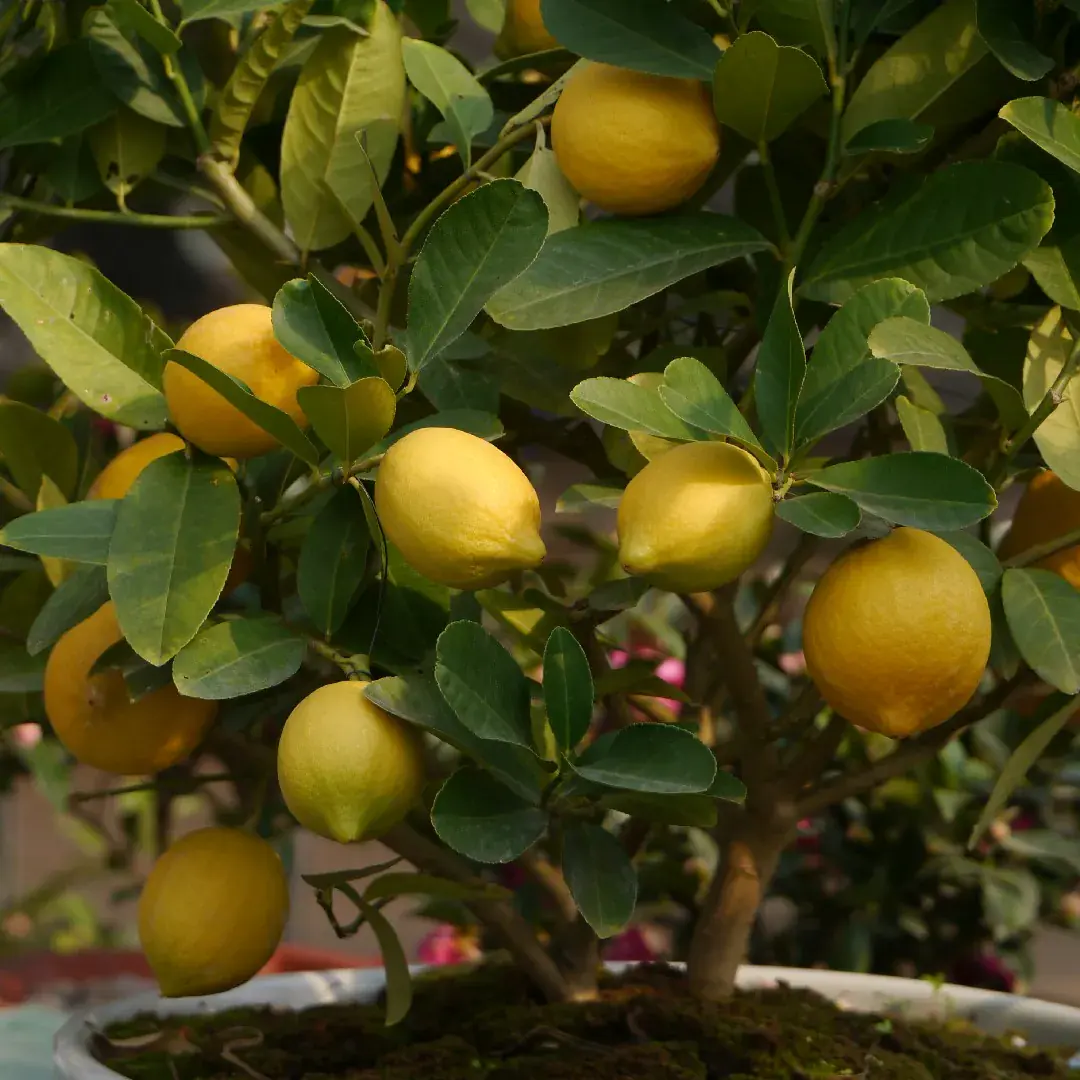
Lemon
Citrus limon
The most requested citrus for home gardens: compact, fragrant, productive most of the year.
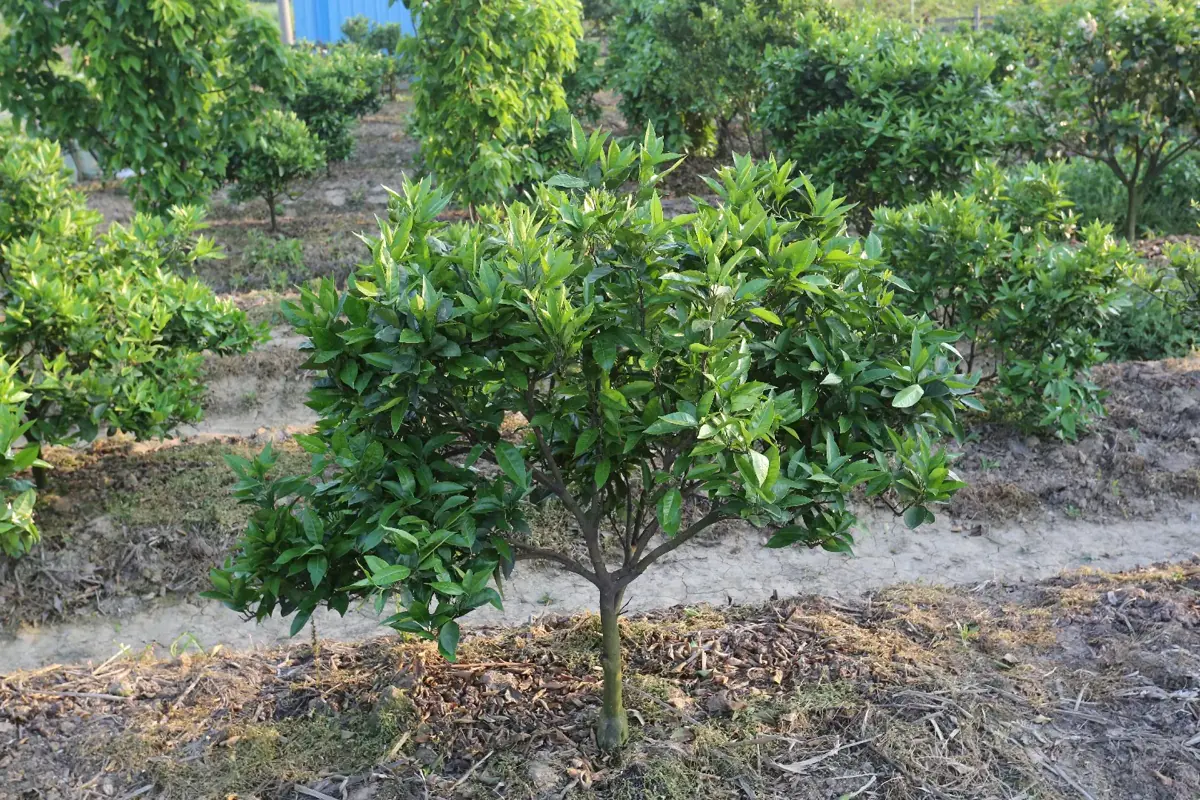
Mandarin
Citrus reticulata
Small, easy-peel citrus on a tree that fits a narrow courtyard.